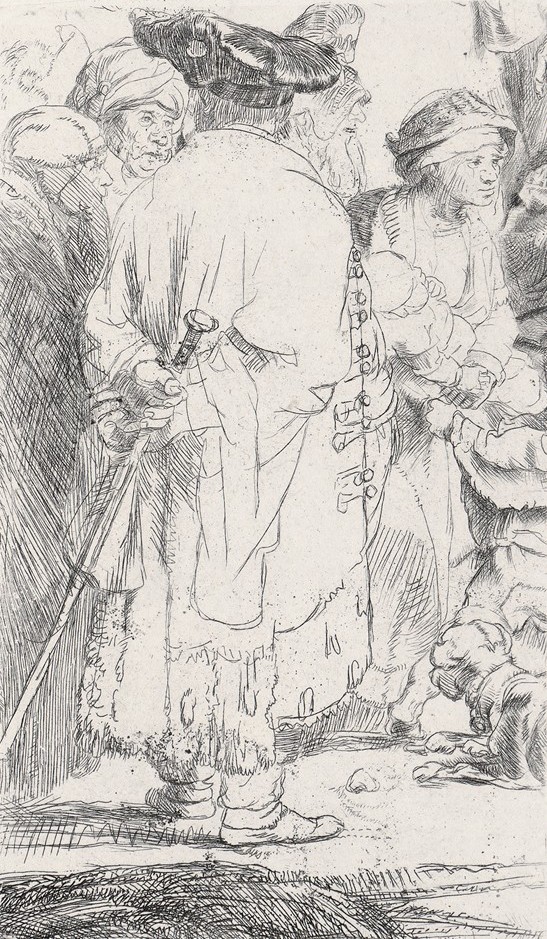
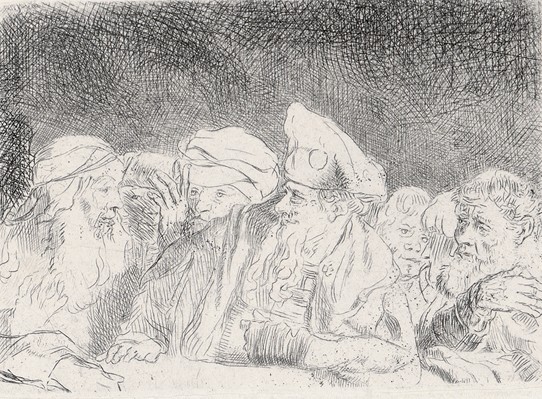
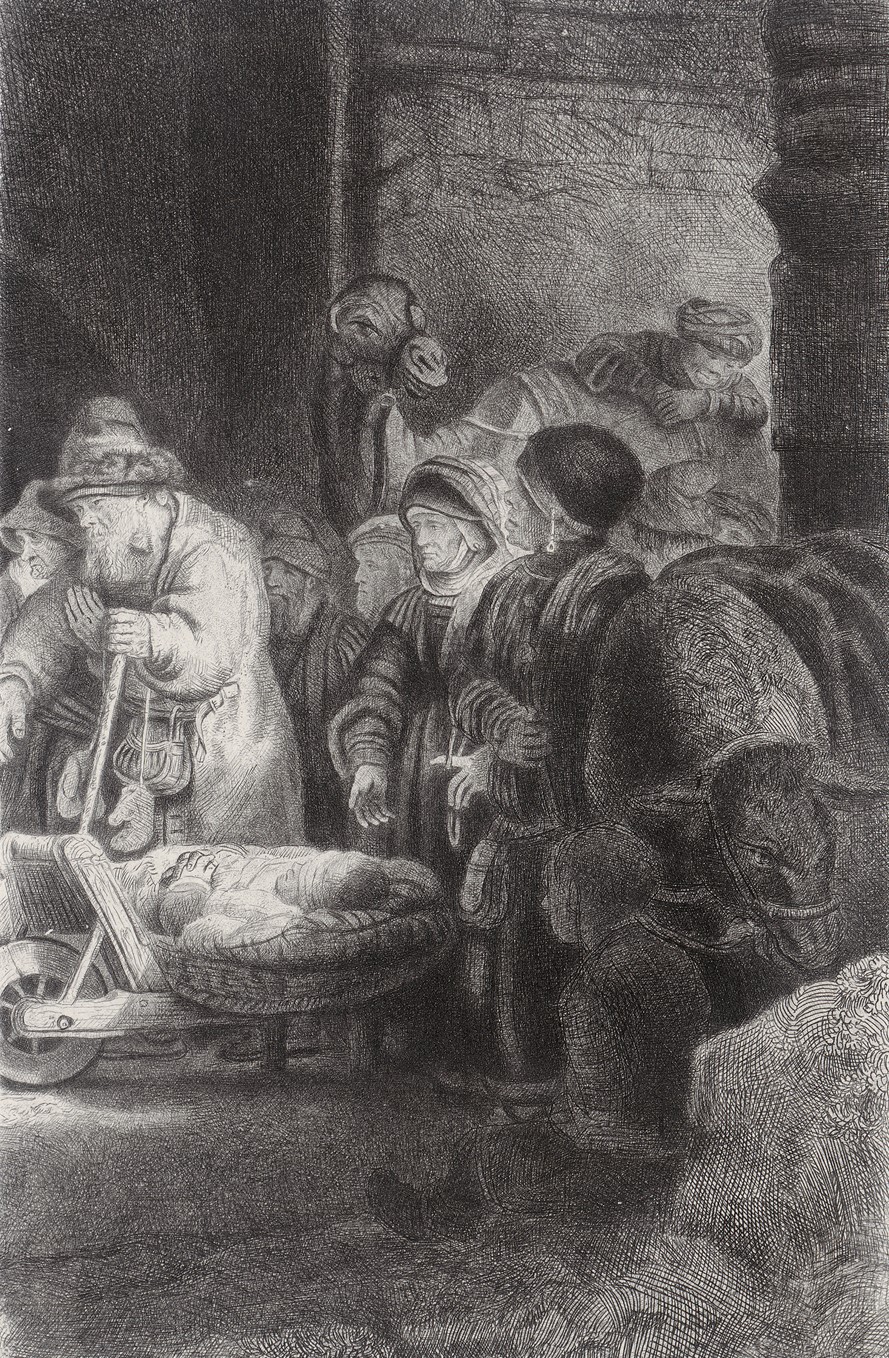
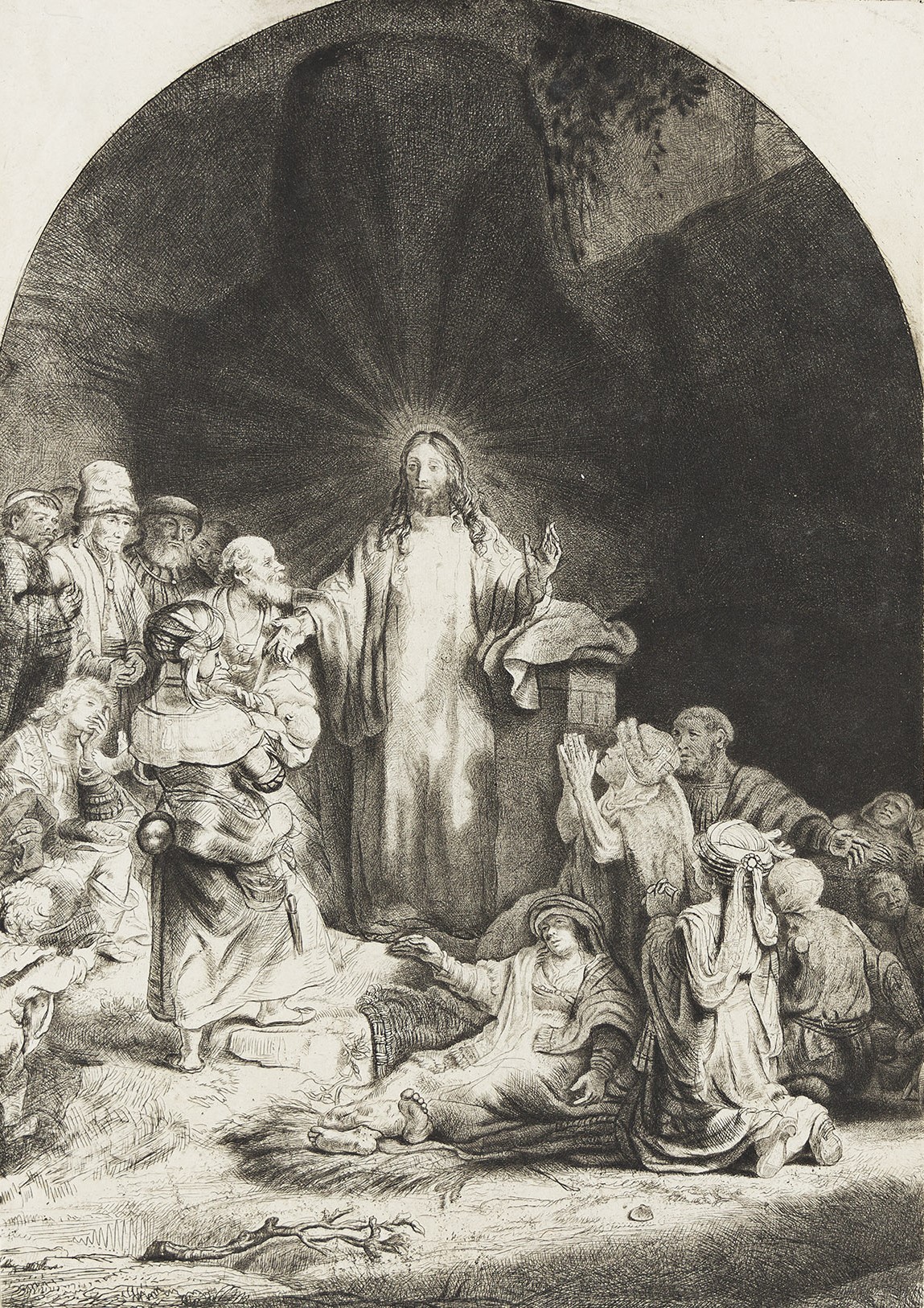
The original full plate: etching, drypoint and burin. Ca 1648.
Not signed, not dated.
Size of the full plate: 278 x 388 mm. Surface: 1079 cm2.
Sizes and surfaces of the four fragments:
A2: 227 x 210 mm, 477 cm2.
B: 141 x 75 mm, 106 cm2
C: 54 x 74 mm, 40 cm2
D: 190 x 122 mm, 232 cm2
The original, complete copperplate was initially owned by an unknown person in Holland and sold around 1775 to the painter and etcher John Greenwood, who resold it the same year to Capt. William Baillie (1723-1810). He heavily reworked and adapted the plate and printed about 100 copies of it. He then cut the plate in four pieces. Separate prints of these were made and published by Boydell.
Each individually quite interesting prints. None of the plate-fragments has survived.
Rarity of impressions
All four fragments are very rare and seldom seen in auctions.
In collections (New Hollstein – 2013): A1 14, A2 (arched) 11, B 22, C 21, D 22.
Nowell-Usticke: The four separate pieces into which the plate was finally cut, are quite rare and good looking.
Description
In the 18th century Capt. Baillie cut up the plate in four separate fragments of which impressions were published by Boyden.
NH A1 is the central part, with the head of Christ
NH A2 is the same part, now arched.
NH B is the man in the lower left corner
NH C shows the figures leaning on the wall on the left
NH D shows the ass and the camel at right
Rembrandt in Black & White: 250
New Hollstein: 4th state of IV/White-Boon: 2nd state of II.
An exceptional set of all four fragments, printed on three large sheets, each measuring 545 x 402 mm, surface 2191 cm2.
In each sheet: Countermark: LB
Exhibitions
Rembrandt, de fotograaf, Westfries Museum (Hoorn), June 2024 – January 2025;